
What is a network?
A network consists of two or more computers or devices that are linked.
What is the purpose of a network?
To transmit, exchange or share data and resources.
What are the essential components of a network?
-
- Cables
- Routers
- Switches
- Firewalls – Not essential but extremely important
How does it all fit together?
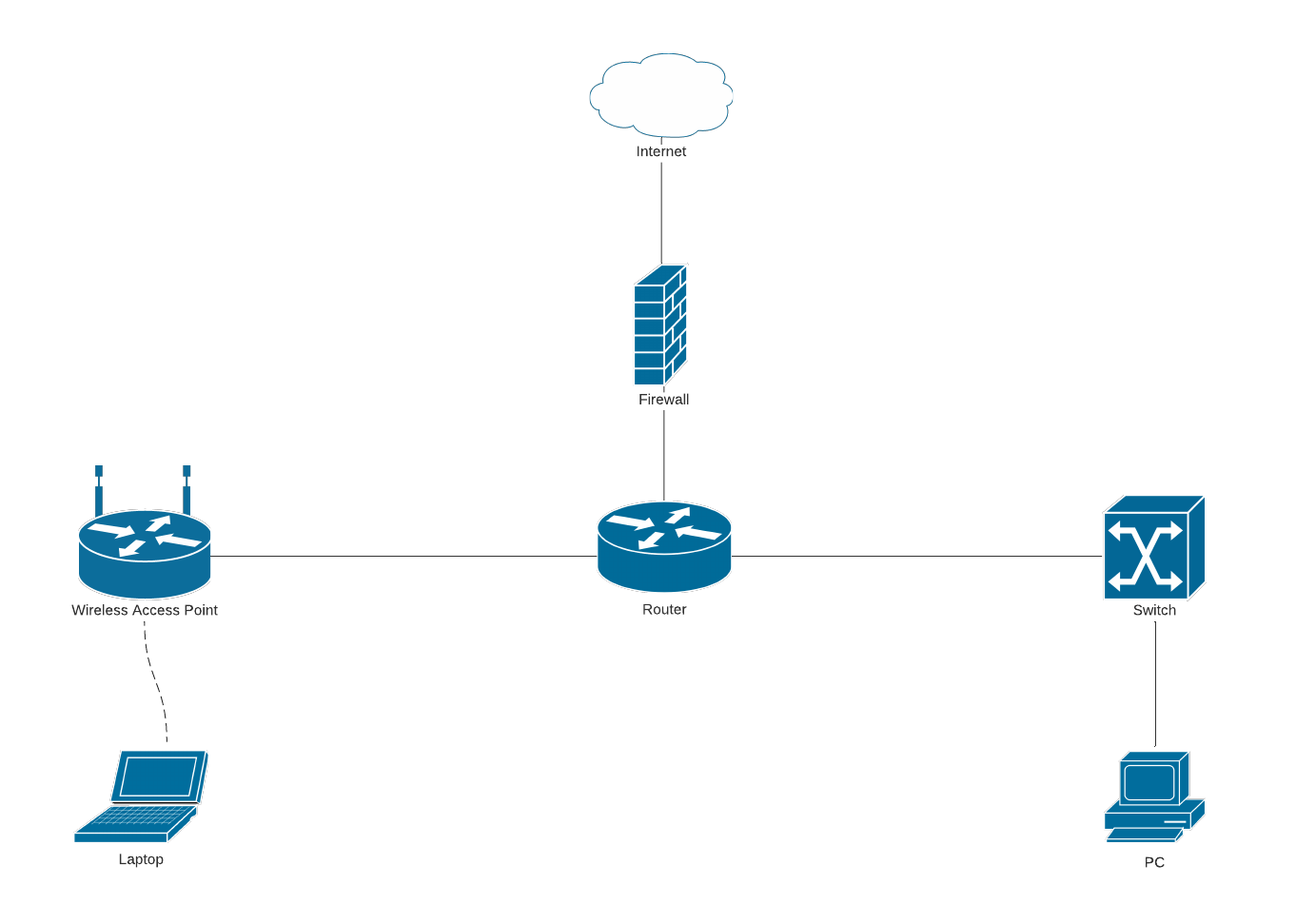
The easiest way to facilitate this would be to represent this in a diagram form, as shown below:
Generally speaking, a client/device will connect via cable to a switch. The switch would then be connected to a router. The router would then have a link (Fibre, copper, microwave, etc.) to the ISP network, which would usually terminate at the closest datacentre in the region.
How do devices on a network communicate with each other?
-
- Devices need to be either physically connected (Copper or fibre links predominantly) or via a wireless access point (Which also needs to be wired into the network)
- Networks all follow a set of rules (Called protocols) when sending information back and forth to ensure that they can understand each other in a standard fashion. The information or data is sent in the form of a packet.
- The size and purpose of the network will determine which protocol is used for communication.
What are some advanced devices on a network and what are their functions?
-
- Firewall – Firewalls add a layer of security to the network. These prevent unauthorized access to the network from the outside world but can also stop and alert on malicious or unwanted traffic from leaving the network.
- ONT – Optical Network Terminals are used to connect the fibre from the street into your home/office.
- NTP Server – Network Time Protocol servers provide a centralized time source for devices on the network. This is especially important in financial and other audited environments.