
Policy – Active Shooter Attack
- Scope
This policy applies to all employees employed on a permanent or fixed-term contract. - Purpose
The purpose of this Policy is to advise employees on how to act in the case of an active shooter attack.
Active Shooter Attack:
Active shooters or aggressors may use other weapons and/or improvised explosive devices (IED) or vehicles to cause additional harm and mayhem and to impede law enforcement and emergency services responders. There may be no pattern or method to their selection of victims. These situations are dynamic and evolve rapidly, so it is important that you act quickly and that you remember to Run Hide Fight. The following recommendations are options to be considered and should not be thought to be sequential. Select the best course of action according to the situation in which you find yourself.
RUN:
- If a safe path is available, run
- Always try to escape or evacuate even if others insist on staying
- Encourage others to leave with you but do not let their indecision slow down your escape
- Try to prevent others from entering the danger zone.
- Keep your hands visible for law enforcement
- Call the police when you find a phone to report the incident and description/location of the shooter(s)
HIDE:
- If you cannot escape, find a place to safely hide and be silent
- Turn out lights, close window blinds/curtains, lock doors if possible and silence your cell phone ringer and vibration mode
- Barricade doors and windows if able to with furniture and other objects
- Stay low to the ground but do not sit down; be prepared to move
- Gather items to use for self-defence
- Identify other methods of evacuating should the opportunity to escape occur (other doors, stairwells, or windows)
- Render first aid to the injured if safely able to do so
- If you’re unable to evacuate, remain in place until the “All Clear” is released through the police
- If it’s safe to do so, call the police and report your location. If the shooter is in the area and able to be heard, call and keep the line open for dispatchers to listen
FIGHT:
- As a last resort, act with aggression and use improvised weapons to distract and/or disarm the shooter
- Throw objects at the shooter’s head – aim for their eyes
- Work together as a team if others are present
- Upon use of a distraction device, immediately attempt to escape or take down the shooter
- Commit to action as your life is at risk
- Remove the weapon from the shooter’s reach and safely hide it – do not handle it because the police may perceive you to be a threat
- If the shooter is taken down, immobilize all limbs (arms, legs, head) until the police arrive
If you decide to flee during an active shooting situation, make sure you have an escape route and plan in mind. Also:
- Do not attempt to carry anything while fleeing
- Move quickly
- Keep your hands visible and follow the instructions of any police officers you may encounter
- Notify authorities of the location of wounded people as soon as possible
- Do not try to drive off until advised it is safe to do so by police or campus administrators
Policy – Armed Robbery
All employees are entitled to a safe and violence-free workplace. If an employee knows of a potential concern or needs to report an incident, he/she should contact his/her Manager and the Human Resources Department.
- Scope
This policy applies to all employees employed on a permanent or fixed-term contract. - Purpose
The purpose of this Policy is to advise employees on how to act in the case of an armed robbery.
ROBBERY IN PROGRESS:
The employee being robbed should remember:
- Offer no resistance
- Stay calm
- Do not attempt to run away or make any sudden movements
- Remain calm and avoid any action that might incite the robber to act violently. The robber may be nervous, and further excitement by the employee can cause the robber to panic and harm the employee or bystanders.
- Keep your hands where the robbers can see them – do not let them think you are trying to do anything without them knowing
- Carry out instructions as directed and answer all questions. Obey the robber’s instructions, even if it appears that employees cannot be harmed. Money and property are not worth the price of a life.
- Do not refuse to handover anything
AFTER THE ROBBERY:
Immediately after the robbery, employees will be checked for possible injuries. Once that has been established, follow these steps:
- Report to your Manager.
- Immediately call the local police department.
- Close and secure the office until the police arrive. This procedure will help preserve the scene of the crime for fingerprints and other physical evidence.
- Preserve any notes that the robber may have written, such as a request for money/valuables.
- Each employee involved in the incident should write down his/her own description of the robber and events and should complete the Physical Characteristics Form that is supplied. Employees should not confer with other witnesses or compare notes.
PHYSICAL CHARACTERISTICS FORM
Do not discuss any details of the event until the police are through taking statements from you and your co-workers. Thank you for your cooperation. Keep the robber under close observation and try to remember the following which can be used to identify the Robber when SAPS investigate:
| Perpetrator 1 | Perpetrator 2 |
|---|---|
| Male / Female | Male / Female |
| Race / Nationality | Race / Nationality |
| Height | Height |
| Weight | Weight |
| Build | Build |
| Hair Color/Length | Hair Color/Length |
| Glasses | Glasses |
| Eye Color | Eye Color |
| Scars or Marks | Scars or Marks |
| Weapon Type (revolver, automatic rifle, shotgun, etc.) | Weapon Type (revolver, automatic rifle, shotgun, etc.) |
| Jewellery | Jewellery |
| Clothing | Clothing |
| Shirt | Shirt |
| Pants | Pants |
| Hat | Hat |
| Shoes | Shoes |
| Vehicle: Type | Vehicle: Type |
| Vehicle: Model/Year | Vehicle: Model/Year |
| Vehicle: Color | Vehicle: Color |
| License Plate | License Plate |
| Additional Information: | Additional Information: |
Policy – Bomb Threat
- Scope
This policy applies to all employees employed on a permanent or fixed term contract.
- Purpose
The purpose of this Policy is to advise employees on how to act in the case of a bomb threat.
- Guiding principles on a telephonic bomb treat:
- Do not transfer the call as the call might get lost!
- Listen to the caller
- Try to identify any noises in the background – that might help the police in the investigation of the bomb threat
- Keep the caller busy by asking the following questions:
- Where did you place the bomb?
- What time will the bomb explode?
- What does the bomb look like?
- Why did you put the bomb?
- How big is the Bomb?
- Record your conversation with the caller by taking down notes of the information given by the caller.
- Record all your information on the Bomb Threat Information Sheet.
- On completion of the call, inform the MD / HR / Your Manager who will contact relevant expert assistance.
- Complete the Bomb Threat Checklist as best as possible and have it ready for when the police arrive.
- Await further instructions from MD / HR / your Manager
4. Possible Searches:
- Search parties may be made up of Management and Health and Safety Committee Members while the rest of the staff is directed to assemble at a place to be announced.
- Restrooms, parking lots, and public areas for general uses are the first places that will be searched.
- Fire escape stairs and all the floors including meeting rooms must be searched. To make the search go faster split search party into pairs.
- Once all the information has been gathered about the bomb threat, everyone who will be included in the search will give the information and inform everyone not to touch anything that is suspicious and inform the experts of anything unusual.
- Anything that is suspicious should be inspected by detectors and should not be moved until permission is granted. Suspicious items will be in: Boxes, packages, bags, luggage, carton boxes, letters, tools etc.
- Items without an owner or things that are left in a hurry etc. should be isolated away from other people.
- The MD and HR should be informed always of the status of the search.
REMEMBER, ITEMS THAT ARE SUSPICIOUS, ARE ITEMS THAT ARE ‘OUT OF PLACE”. NOT WHERE THEY SHOULD BE AND UNATTENDED.
NEVER TOUCH, REMOVE OR OPEN! LEAVE IT FOR THE POLICE.
BOMB THREAT CHECKLIST
STEP 1
Date: ___________________________________
Time call received: ___________________________________
Call received by: ___________________________________
Public telephone: YES ______/ NO______
Details of threat:___________________________________
Where is it?:___________________________________
What does it look like? ___________________________________
When is it set to explode? ___________________________________
Reason given as to why bomb was planted.___________________________________
How many devices?___________________________________
Time call ended. ___________________________________
STEP 2
Notify MD & HR & your Manager
STEP 3
Calmly record the following: _____________________________________
Voice on telephone: Man / Woman / Child: Age: __________
Conduct: Excited / Nervous / Calm / Angry / Coherent / Polite / Emotional / Friendly
Characteristics: Loud / Soft / Intoxicated
Speech: Fast / Slow / Clear / Impediment
Vocabulary: Excellent / Good / Local / Foreign / Race / Other
Background noise: Factory / Machines / Traffic / Trains / Aircraft / Music / Animals / Office / Machines
Other __________
Is the caller familiar with the premises and the layout thereof from the way he is speaking to you? Yes __________ No_________
Any knowledge of: Personnel / Management / Activities /
___________________________________________________________________________
___________________________________________________________________________
Did you recognize the voice? (Give details): _______________________________________
___________________________________________________________________________
___________________________________________________________________________
Bomb Threat Information Sheet:
Background sounds:
|
Caller’s voice:
|
Threat Language:
|
Policy – Bomb Blast
1. If possible, assist seriously injured people, do not move casualties unless qualified to do so or unless life is further endangered.
2. Contact Emergency services for assistance
3. Guide people away from the affected area
3. First Aid team to attend to injured staff while awaiting Emergency services.
4. Await further instructions from Senior Management.
Policy – Choking
- Scope:
This policy applies to all employees employed on a permanent or fixed term contract by the Company. - Purpose:
2.1. The purpose of this Policy is to assist staff in using an emergency technique to unblock the windpipe of other employees or clients so that they can breathe in the event of choking at the premises. - Guiding principles:
3.1 If someone’s airway is completely blocked and they are still responsive, the first thing the person will most likely do is grab their throat and become distressed
3.2. You will have to intervene immediately, or the person might die.
- Shout for help!!!
- Inform the person that response to your help call. A Frist Aider and the Manager must be advised immediately. Reception should be the next person to get in touch with, so that she can call the paramedics, if required.
- Until help arrives you will have to help the person
- Ask the person “Are You Choking?” If the person can cough, talk, or breathe, just encourage them to cough.
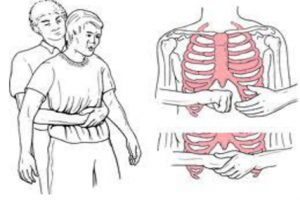
- If the person cannot talk or cough, stand behind the person and place your fist above the person’s navel, now grab that fist with your other hand and perform up to 5 rapid inward and upward abdominal thrust. If unsuccessful do up to 5 back slaps and then proceed by doing another 5 abdominal thrusts. Repeat the chest thrust and back slaps until the object is dislodged.
- In the case where the person is obese or in late pregnancy, you will need to do 5 chest thrusts instead of the 5 abdominal thrusts. Follow the same procedure as above.
- When the item that caused the blocking has been dislodged you will need to ask the person if you can contact a Doctor to do a check-up.
- Should the person become unconscious you will need to start CPR immediately. As you open the airway, before you ventilate you need to check for any foreign object in the mouth. Carefully remove any visible foreign object. Do this before each ventilation, do not do blind finger sweeps.
Policy – Coronavirus
A contagious disease known as Coronavirus or COVID-19 (“the Virus”) was first detected in China in December 2019 and has since regrettably spread worldwide. The World Health Organization (“the WHO”) has declared the virus as a Public Health Emergency of International Concern (“PHEIC”) which is a formal declaration by the WHO of “an extraordinary event which is determined to constitute a public health risk to other States through the international spread of disease and to potentially require a coordinated international response”, formulated when a situation arises that is “serious, sudden, unusual or unexpected”, which “carries implications for public health beyond the affected state’s national border” and “may require immediate international action”. In light of the above, and the seriousness thereof, the Company has put in place plans to prepare for the risk of employees becoming exposed to or ill with the Virus as a result of infiltration of the Virus into the work environment.
How does COVID-19 spread?
COVID-19 is most likely to spread when there is close contact (1.5 meters or less) with an infected person. It is likely that the risk increases as the period of exposure to an infected person lengthens. Contaminated droplets produced when an infected person coughs or sneezes are the main means of transmission. There are two main routes by which people can spread COVID-19:
- Infection can be spread to people who are nearby as droplets are inhaled into the lungs.
- It is also possible that someone may become infected by touching a surface, object or the hand of an infected person who has been contaminated and then touching their own mouth, nose, or eyes.
Primary symptoms of COVID-19
The following primary symptoms may develop up to 21 days after exposure to someone who has COVID-19:
- Cough
- Sore throat
- Shortness of breath/ difficulty in breathing
- Loss of smell
- Loss of taste
Secondary symptoms may include:
- Fever
- Redness of eyes
- Body aches
- Nausea
- Vomiting
- Diarrhea
- Fatigue
- Weakness
Infections can cause more severe symptoms in people who are over the age of 60 and those with compromised immune systems such as diabetes, cancer, and chronic lung disease.
What to do if you develop symptoms
People who contract COVID-19 may take anywhere from one to twenty-one days to develop symptoms. Even if you do not have a history of travel to a COVID-19-affected region or contact with an individual who has contracted the illness, you must still inform your healthcare provider if you present with symptoms of COVID-19.
Hotline for the COVID-19 as per the Department of Health website:
Employees should request to stay at home if they are sick and have been booked off. All employees should follow the company’s sick leave policy in such situations. If the company has reason to suspect that an employee has been infected with COVID-19 or an employee becomes ill at work, the employer will request the employee to leave the workplace and seek medical treatment and/or testing immediately.
Travel
All domestic and local air travel must be approved by your Manager.
Meetings
- Consider whether a face-to-face meeting or event is required – could it be replaced by a teleconference or any other electronic platform.
- Could the meeting be scaled down so that fewer people attend?
- Ensure that all participants in the meeting have washed their hands for 20 seconds and utilize hand Sanitiser prior to the meeting commencing.
- Ensure that all delegates are seated at least one and a half meter apart.
- The names and contact details of all participants in the meeting should be retained for at least one month. This may be done through the completion of a register and will assist healthcare authorities in tracing those who have been exposed to COVID-19 if a participant does become ill with the virus shortly after the meeting.
- If a participant should contract the virus shortly after the meeting, the company must inform all participants.
- The host of the meeting will ensure to inform the cleaners immediately once the meeting is finished, for it to be sanitized
- Housekeeping will not be allowed to cater for anyone
Social distancing measures
- The Company will arrange the workplace to ensure minimal contact between workers and ensure that there is a minimum of one and a half meters between workers while they are working.
- If it is not practicable to arrange work stations to be spaced at least one and a half meters apart, the Company will arrange for physical barriers to be placed between work stations and supply the employee with the appropriate PPE based on a risk assessment of the workplace. The alternative could be to work on a rotational basis, and not allow all employees to return at once.
- Social distancing in common areas may be achieved through i.e. queue control or staggering of break-times to avoid the concentration of employees in common areas such as canteens and lavatories.
Symptom Screening and Leave
Scenario 1 – Positive Test
- An employee who has tested positive for COVID-19 is treated in terms of Scenario 1 procedures, shall immediately be required to work from home and / or placed on paid sick leave upon confirmation of diagnosis and severity the symptoms. Where an employee’s sick leave has been exhausted, the employer shall apply for an illness benefit from the UIF. The employer shall not be liable to pay the employee until payment has been received from the UIF. Payment in this regard is not guaranteed and is subject to UIF limitations and provisions.
- The employer shall determine the need to disinfect the workspace where the employee was active if applicable.
- The positive case shall be reported to the NICD and the Department of Employment and Labour by the employer.
- The employee will be required to self-isolate at home for a minimum of 10 days from the date of confirmation of a positive test before s/he will be allowed to return to work.
- The employee will be required to undergo a medical examination at the end of the 10-day self-isolation period to confirm that they are fit for duty. An employee will not be allowed access to the employer’s premises without such confirmation of fitness for duty, and refusal to undergo such an examination will be regarded as insubordination and dealt with in terms of the company disciplinary procedures.
If the worker who has tested positive has come into contact with other workers at the workplace, assess those workers’ exposure to ascertain whether the exposure carries a high or low risk of transmission and instruct them as follows:
- High Risk Exposure: close contact within 1.5 metre of a COVID-19 confirmed case for more than 15 minutes without PPE (i.e., no face cover/ eye cover) or with failure of PPE and/ or direct contact with respiratory secretions of confirmed COVID-19 case (clinical or laboratory). In such case, the worker must self-quarantine for 14 (fourteen) days and perform daily symptom self-checks.
- Low Risk Exposure: more than 1.5 metre away from a COVID-19 confirmed case for less than 15 minutes OR within 1.5 metre but wearing PPE (face cover/ eye cover). Also considered low risk if COVID-19 case was wearing a mask (i.e., there was source control). In such case, the worker may continue to work using a cloth mask and complying with standard precautions and symptoms must be monitored for 10 (ten) days from first contact.
Only allow the worker to return to work after completing the 10 (ten) day self-isolation period and, if the worker suffered from moderate or severe illness, undergoing a medical evaluation confirming fitness to return to work.
- Upon return to work, all safety measures such as personal hygiene, wearing of masks, social distancing, and cough etiquette must be strictly adhered to by the employee.
- The employee shall be required to continue wearing a masks at work, and be especially careful during the first 21 days.
Scenario 2 – Symptomatic Employee
- Employees presenting with any of the listed primary symptoms or with additional symptoms without any primary symptoms present shall be treated under Scenario 2 procedures. This will however be treated case by case and evaluate the seriousness of the symptoms shown.
- An employee who presents COVID-19 related symptoms, or who advises the employer of such symptoms, will not be permitted to enter the workplace or report for work.
- Where an employee presents with COVID-19 related symptoms when already at work, the employer will immediately request the employee to return home and seek a medical examination or testing.
- The employer will assess the risk of transmission to other employees and disinfect the area as necessary and undertake contact tracing and refer employees who may be at risk for screening.
- If a medical practitioner finds that the employee does not qualify as a person under investigation as per the NICD, normal sick leave procedures must be followed and the medical practitioner will advise whether or not the employee is fit to work or needs to be booked off / work from home for any period. This is treated under normal sick leave procedures if incapable of performing any duties from home.
- If a medical practitioner refers the employee for COVID-19 testing, the employee will be placed on paid sick leave until the test results are received. If the employee’s sick leave has been exhausted, it will be considered as unpaid leave.
- If the employee tests positive for COVID-19, they will be dealt with in terms of Scenario 1 procedures as per clause 3.6.1.
- If the employee tests negative for COVID-19, the employee will be permitted to work from home or follow the sick leave procedure until the employee is healthy to return.
Scenario 3 – High Risk and Confirmed COVID-19 Exposure for Asymptomatic Employee
- If a worker has been in contact in the workplace with another worker who has been diagnosed with COVID-19, the employer must assess the worker’s exposure in accordance with the Department of Health’s Guidelines to determine whether the exposure carries high or low risk for transmission between workers.
- A person may be considered at high risk of transmission if they have worked closely in the same environment as an infected person. Close contact is defined as having had face-to-face contact (≤1 meter) or having been in a closed space with a confirmed COVID-19 case for at least 15 minutes without the appropriate PPE and without having followed safety and hygiene protocols.
- If it is deemed that there is a high risk of exposure, the employer will instruct the employee to self-quarantine for 10 days. Staff exposure must be reported to the NICD by the employer.
- The employee will be permitted to work from home or be placed on sick leave to allow for self-quarantine, depending on the symptoms.
- If the employee’s sick leave has been exhausted, the employee will apply for UIF illness benefits, otherwise it will be considered as unpaid.
- The employee during self-quarantine must do a daily symptom self-check until 10 days since the last COVID-19 exposure.
- If symptoms related to COVID-19 develop, Scenario 2 procedures will be followed as per clause 3.6.8.
Scenario 4 – Low risk and Suspected COVID-19 Exposure for Asymptomatic Employee
- If upon assessment of the risk of exposure to employees the employer deems the risk to be low, the employer may permit the employee to continue working using a mask and complying with standard precautions.
- The employer must monitor the worker’s symptoms for 10 days from the first contact and revert to Scenario 2 procedures if symptoms develop.
- If the COVID-19 test for the possible index case is negative, no further action is needed.
- If the index case is COVID-19 positive, but the person wore full PPE and applied all necessary health and hygiene protocols, the exposed employee may continue to work from home and self-monitor for 10 days. If COVID-19 symptoms develop, follow Scenario 2.
Note: Report any positive cases to your relevant HR Representative.
Hygiene in the workplace:
- The Company will supply hand sanitizers in high risk areas such as the entrance of the building, kitchens, and offices. Other hygiene equipment is offered (Surface cleaner) as well as implementing rules for sanitation throughout the working day within the working environment and notably informing and educating Employees with reading material on preventative measures and treatment.
- No handshaking or physical contact is allowed. One’s face should not be touched either.
- Areas and surfaces such as lavatories, door handles, and shared electronic equipment will be regularly cleaned and disinfected, and biometric systems will be disabled or made COVID-19 proof.
- All visitors and employees entering the offices must report to the receptionist to go through the screening process and to Sanitize their hands.
- Coughs and sneezes must be covered with a tissue; the tissue must be disposed of.
- Wash your hands often with soap and water for at least 20 seconds, especially after going to the bathroom, before eating and after blowing your nose, coughing, or sneezing. Alternatively use a hand Sanitiser containing at least 70% alcohol. Only paper towels will be provided to dry hands after washing, no fabric toweling is allowed.
Wearing face masks:
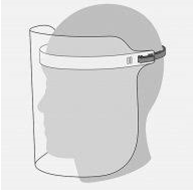
- The use of face masks covering the mouth and nose is compulsory, when in public, entering any building, premises, work and when utilizing public transport. Persons without a face mask will not be permitted to enter the
- Employees shall be trained on the correct use of face masks.
- You must always wear your mask.
Not acceptable:

Acceptable

Acceptable, but with a 3 layer mask as above:
Seminars, Training and Conferences:
No employee may attend external seminars, training, or conferences, unless approved by the Managing Director. The presentation of seminars and training to clients will be converted to online/blended facilitation.
COVID-19 Compliance Officer:
A COVID-19 Compliance Officer/s is appointed to oversee the implementation of and adherence to the plan as referred to in section. The Compliance Officer/s will ensure adherence to health and safety measures established to minimize the risk of COVID-19 in the workplace and address employees or their chosen representatives of their concerns. Employees are required to adhere to the reasonable rules and instructions set out by the Compliance officer/s.
Consequence of breach:
If an employee breaches this policy the necessary disciplinary action will be taken. It is important to note that the company’s sick leave policy will not be adjusted or become flexible during the outbreak of COVID-19. The normal sick leave policy which is in line with Labour Law will still apply. It is the employee’s responsibility to contact management should he/she have any queries related to this Policy.
Policy – Foreign Object/Parcel
- Scope
This policy applies to all employees employed on a permanent or fixed-term contract. - Purpose
The purpose of this Policy is to advise employees on how to act in the case of a Foreign Object / Parcel.
- If you discover a parcel, object or strange baggage which is left unattended for an amount of time and no one seems to know who it belongs to – Do not Touch it!
- Inform Management / HR as they will decide as to whether the item is something to be concerned about and contact the necessary authorities if deemed necessary
- Guide people away from the area without causing panic.
- Allow management to deal with the situation
Policy – Hostage Situation
- Scope
- This policy applies to all employees employed on a permanent or fixed term contract by the Company.
- Purpose
2.1. The purpose of this Policy is to ensure the safety of staff members and guests during a hostage situation.
- Do not put yourself or others at danger, comply with all requests and instructions from the hostage-taker.
- Be assured that the situation is being taken seriously and appropriate action is being taken to secure your release.
- It is normal to feel frightened and powerless at the onset of a hostage situation, but it is important to try to remain as calm and rational as possible.
- Take note of what is going on around you and be observant- you could be released at any time, and you could provide essential information. -How many hostage takers -How many hostages -Weapons?
- If the hostage-takers are not known, what attributes do they have, language, description, clues to why they are taking hostages, are they confident, anxious, in control etc.
- Do exactly what you are told and do not make suggestions. This is likely to anger the hostage-takers who will be under stress themselves.
- Under no circumstances argue with the hostage-taker.
- Do not say or do anything that may put you or others at further risk.
- If you can speak, and it is safe to do so, try to calm the hostage taker. They will be anxious and more likely to react negatively to stressors.
- Do not lose hope, and avoid an open display of despair.
- Initially, do not speak unless spoken to. Only speak when the hostage-takers will not react negatively, if unsure, keep quiet.
- Try to rest, but do not turn your back towards the hostage-taker.
- If you need medication, ask for it. In the case of a rescue attempt, drop to the floor and stay there until told otherwise by one of the rescuers. If a forced rescue is required, it may well be noisy and disorientating and remain on the floor until told to move by the rescuers.
Policy – Shelter in place
- Scope
This policy applies to all employees employed on a permanent or fixed-term contract. - Purpose
The purpose of this Policy is to advise employees on how to act in the case of a need for Shelter-In-Place.
Shelter-in-place refers to a designated area of safety when it is not safe to go outside. An example is a small, interior room with no or few windows where refuge can be taken.
Why you might require Shelter-in-place:
The air outside may become dangerously contaminated biologically, radiologically, or chemically – either intentionally or accidentally, severe weather such as a thunderstorm or tornado is occurring; or there is an active shooter, making it unsafe to be exposed to outside conditions.
In any emergency, local authorities may not immediately be able to provide information on what is happening and what you should do. However, you should monitor television or radio news reports for information or official instructions as they become available. If you are specifically told to evacuate or seek medical treatment, do so immediately.
Shelter-in-place for severe weather:
- Stop work or close business operations.
- Share the notification with others in the building if possible, but do not leave the area where you were instructed to shelter in place.
- Close all windows, exterior doors, and any other openings to the outside.
- Bring everyone into the room(s) and shut the door(s).
- Keep listening to the radio or television until you are told all is safe or you are told to evacuate.
Policy – Weather/Storm/Natural disaster related emergencies
- Scope
- This policy applies to all employees employed on a permanent or fixed term contract by the Company
- Purpose
2.1. The purpose of this Policy is to ensure the safety of staff members and guests during a weather or storm related emergency.
Guiding principles
3.1. Tsunami
- Usually In the event of an expected Tsunami, weather reports will indicate rapid increases in ocean swells. It is important to remember that although we are not aware of it, tectonic plates are constantly moving underneath us hence having an effect of tide movement and in extreme instances Tsunamis.
- A Tsunami has never hit the shores of South Africa but if we look at the Tsunami that hit Thailand in December 2005, it is evident that there was no notice given and people were caught off guard.
- If we were to be given warnings beforehand that a Tsunami was due to hit the shores of Cape Town Specifically, it would most likely be advised that residents make their way as far inland as possible and to the highest ground in these areas. If caught in the wash of a Tsunami, the following make be advisable:
- Know how to swim or try to obtain a floating apparatus as soon as possible
- Do not stay in buildings or near walls that are likely to be crushed and collapse when hit by the force of tsunami
- As far as possible try not to fight the current once it has hit, the tides will be too strong and your greatest chance of survival will be to go in the direction of the current, trying not to hit into obstacles along the way.
- If you see something that you think will hold you, try to grab onto it, if not try to obtain anything that could assist in keeping you above the water.
- Try to reach an unaffected area as soon as possible.
3.2. Flooding
- The Western Cape is known for some heavy rain in the winter months (June, July, and August each year). In extreme instances, the roads and lower lying areas can be affected by flooding.
- Should our underground parking become flooded, management will advise staff to refrain from using the lifts and to stay above ground level.
- In any flooding situation, it is recommended to stay as far above sea level as possible.
- Place sandbags where necessary to protect vital areas.
- It is not recommended to drive a car through a flooded road.
- If the roads outside are flooded staff will be asked to remain indoors.
- Staff should adhere to management’s discretion in such situations.
- Report floods: 0860 103 054 or 021 597 6000.
3.3. Earthquake
- Earthquakes average a level 4 on the Richter scale, which is not seen as very dangerous, are accounted for in Southern Africa, mostly in the Mpumalanga and Northern Cape regions.
- In the event of an earthquake which would most likely be unforeseen, staff are to evacuate and/or assemble as instructed by management.
- Staff should not be in the underground parking area
- First Aid team to assist any staff who may have been injured while emergency services are contacted
3.4 Tornados/Hurricanes/Cyclones/Twisters
- These are very rare occurrences in South Africa. The last ‘Tornado’ was experienced in Manenburg in 1999.
- A tornado is a violently rotating column of air that is in contact with both the surface of the earth and a cumulonimbus cloud or, in rare cases, the base of a cumulus cloud. They are often referred to as twisters or cyclones
- Know the signs of a tornado: Weather forecasting science is not perfect, and some tornadoes do occur without a tornado warning. There is no substitute for staying alert to the sky. Besides an obviously visible tornado, here are some things to look and listen for:
- Strong, persistent rotation in the cloud base.
- Whirling dust or debris on the ground under a cloud base — tornadoes sometimes have no funnel!
- Hail or heavy rain followed by either dead calm or a fast, intense wind shift. Many tornadoes are wrapped in heavy precipitation and cannot be seen.
- Day or night – Loud, continuous roar or rumble, which does not fade in a few seconds like thunder.
- Night – Small, bright, blue-green to white flashes at ground level near a thunderstorm (as opposed to silvery lightning up in the clouds). These mean power lines are being snapped by very strong wind, maybe a tornado.
- Night – Persistent lowering from the cloud base, illuminated or silhouetted by lightning — especially if it is on the ground or there is a blue-green-white power flash underneath.
- As directed, go directly to an enclosed, windowless area in the centre of the building — away from glass and on the lowest floor possible.
- Crouch down and cover your head.
- Interior stairwells are usually good places to take shelter, and if not crowded, allow you to get to a lower level quickly.
- Stay off the elevators; you could be trapped in them if the power is lost.
- After the Tornado/Hurricane/Cyclone/Twister has passed, assemble at the designated assembly point.
3.5 Landslide
During a slope instability occurrence – indoors
- Stay inside.
- Take cover under a desk, table, or other piece of sturdy furniture.
During a slope instability occurrence – outdoors
- Try and get out of the path of the landslide or mudflow.
- Run to the nearest high ground in a direction away from the path of the landslide.
- If rocks and other debris are approaching, run for the nearest shelter such as a group of trees or a building.
- If escape is not possible, curl into a tight ball and protect your head.
- Disaster Risk Management Centre: 080 911 4357.