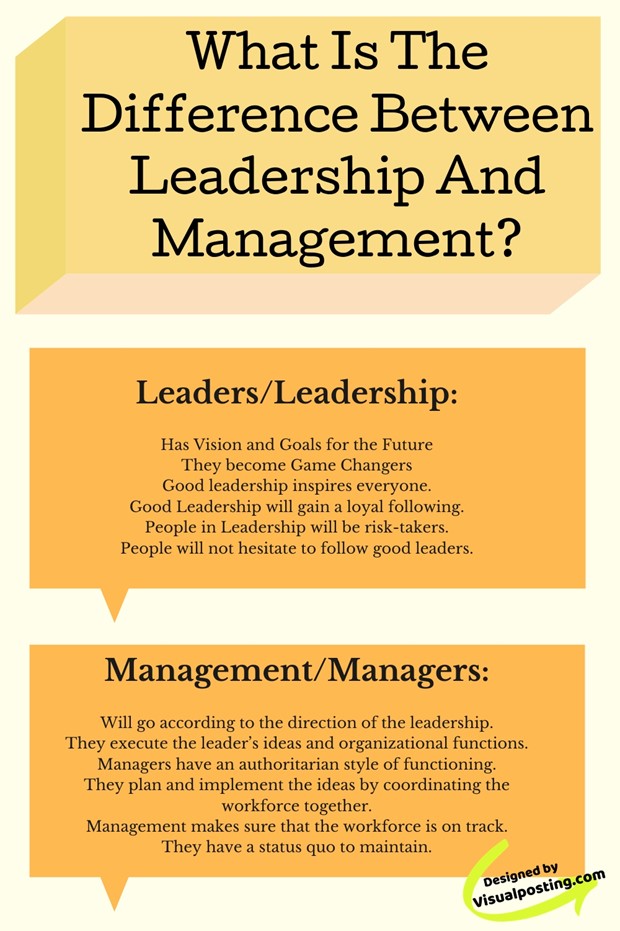
BACK TO BASICS – FIRST TIME MANAGERS
Becoming a manager opens a whole new world of opportunity. With the right mindset and skills, you’ll find it is interesting, challenging, and rewarding.
Whether you just started thinking about becoming a manager or have known you’ve wanted to be one for a while, we’re here to help you.
Make sure you’re becoming a manager for the right reasons
Becoming a manager requires the willingness to learn new things– a lot of new things– and be challenged. It is a career change as much as it is a promotion, so make sure that becoming a manager is what you really want.
There are a lot of reasons you might want to be a manager, but only some of them are good reasons. If you’re not careful, you can end up in a job you don’t like. Carefully consider these reasons, so you make the right decision.
You’re doing it for the challenge of helping others and learning new skills, NOT the money
Managers who take the position for the money tend to run into a variety of problems and eventually fail. First, they often keep doing their old job, instead of embracing the responsibilities and tasks of being a manager. Then, as they struggle, they bring a bad attitude to their team that over time makes everyone else unhappy, too. As things get worse, they then hide from problems that could eventually result in them losing their position (and the money they thought they wanted).
There’s nothing wrong with liking the pay boost. However, your main reasoning for wanting to become a manager needs to be something deeper. Good reasons to become a manager include the desire for growth, challenge, or the fulfilment you get from the building up and helping others.
You like working with & helping people
Being a manager is all about working with others and supporting them. If you love working with others, you’re a natural fit for management. If not, it’s probably not right for you as you’ll run away from the moments you’re needed most, and your team is trying to reach you.
When people take management roles without the desire to help, collaborate, and help fix problems within a team, they’re setting themselves up to fail. A manager that runs from these things can make people feel betrayed; they don’t know who to turn to for help, and then problems fester and create management debt.
Other people’s problems become things you have to think about if you want to be a manager. You won’t get to solve them all, but you will have to want to understand them so you can help where you should.
What is Management Debt?
Once your team or your company grows to have even a little complexity, you’ll notice problems begin to emerge. Often, they start out innocent. A small disagreement here, some unnecessary inefficiency there.
Over time, every problem either becomes bigger, or is addressed. Ignoring it only puts off dealing with it until later when it’s more costly.
Sometimes, putting it off makes sense; you only have so many hours in the day, and you will never get anything done if you’re chasing down every little issue.
However, left unchecked, many problems can spiral out of control and become costly management debt:
- A Team Divided: A few conflicts in team meetings can become team members that hate each other and a team that takes sides.
- Painful Inefficiency: An inconvenience in your process when you’re 2 people, can become a nightmare bottleneck when you have 8 people.
- Costly Incompetence: A poor hire will do worse and worse things until they absolutely must be fired, but at great cost to your team or customers.
- Losing a Star: A once star team member that starts feeling bored will slowly go from motivated, to disengaged, to leaving for another job with new challenges.
- Burnout: An overworked employee will at first push through and be okay, but will eventually physically succumb to burnout.
If you’ve ever experienced any of those issues, you know there were warning signs along the way that were missed or ignored. Waiting proved quite expensive.
The Management Debt Mindset
Every decision you make has consequences. Taking shortcuts, or not looking for unintended consequences of even good decisions can be costly. You must be vigilant.
The Management Debt mindset is about recognizing that these occur, and as a leader you must embrace the never-ending build-up of them.
Problems do not always come to you. Making matters worse, these problems are not always readily apparent to you. Andy Grove describes this as a black box in High output Management; you can’t see everything everyone on your team experiences. Knowing this, you need to have a mindset that you’re always looking for management debt and doing something about it; you have to address the issues that matter before they become big problems that put you in fire fighting, reactive management mode.
You’re willing to give up being an individual contributor
To be a good manager, you need to shift from being an individual contributor to someone who focuses on how they can improve their team. At the core, you become a multiplier. This is a critical mindset shift as it’s the difference between an extra hour of productivity here and there for you vs. dozens of hours for your team. Each time you focus on making your team more effective can lead to exponential results because you’re dealing with an entire team of people, instead of your own individual output only.
You have a growth mindset
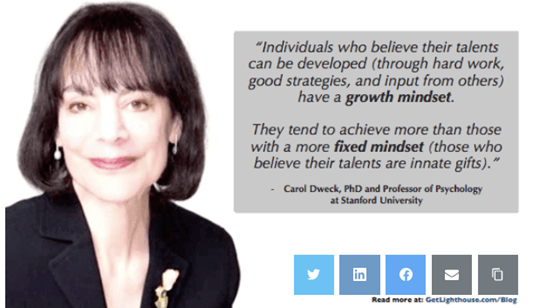
A growth mindset is critical to becoming a manager. You must believe that you (and others) can learn new skills, even if you’re starting from scratch. No one is a natural; everyone can achieve some level of ability with hard work.
If you don’t have a growth mindset, it’s going to be impossible to learn everything you need to know to do your job well. While great managers roll up their sleeves and learn, you’ll be thinking, “I’m just not good at ____.” This will hold you and your team back from the success they could have.
Most importantly, as a leader, you also influence the rest of your team. If you’re not willing to learn and grow, your team will take the cue and be less likely to embrace learning as well. You will also then limit their careers, as you will only give them work, they’re experienced in, instead of coaching them to take on new challenges.
Show you have the ability to teach others
A big part of management is the ability to coach and teach others. There are a million teachable moments and important times to grow your people as a manager.
Being someone who is comfortable coaching can be a big plus when making your case for a new management opportunity. But how can you do that when you’re not already a manager?
Mentor a teammate
Mentoring sits in the relationship management quadrant of emotional intelligence skills, a critical set of skills every manager needs to develop:
Mentoring is highly effective, as researchers Rose Opengart and Laura Bierema from the University of Georgia discovered. They found that employees who get regular mentoring attain higher positions, better pay, and report more career satisfaction.
If you can show you have the ability to mentor and teach another teammate, you’re displaying an important leadership skill that every great manager possesses. It’s also a great way to get noticed for another reason: you’re showing tangible proof of your ability to lead and manage others.
Not sure where to start? Consider asking if you can help mentor an intern first. Best of all, it’s low-risk for all of you.
Develop your writing skills
Communication skills are vital to being a good manager. You’ll be regularly communicating with your team, to other teams, and managing up your company’s org chart regularly.
While this communication will take many forms (meetings, presentations, emails, calls, etc), writing will be a big part of many of them.
The first step to becoming a manager is often taking initiative. Stepping up to help others, improving communication in your team or across others, and writing well are all signs to those that decide who could become a manager next that you could be a good leader.
Make others around you better
One of the most fundamental changes every good manager needs to adopt is switching from an individual contributor (IC) mindset to a multiplier mindset.
Before you become a manager, you focus on maximizing your productivity and efficiency. It’s all about shipping that code, completing that copy, closing those tickets, or hitting that sales goal.
However, once you become a manager, it’s far more effective to ask, “How can I make my team more productive and efficient as a whole?”
That is what it means to adopt a multiplier mindset.
As an individual contributor, you are only responsible for yourself. Meanwhile, as a manager, you can take steps to make your entire team more productive and literally multiply your team’s efforts.
Think of creative ways to make your team better
Adopting a multiplier mindset is at the core of what it means to become a great manager. When you make others around you better, more effective, or unblocked, you maximize their potential.
By showing that you have the ability to make those around you better, you’ll start to be seen as a potential future manager.
How do I become a multiplier?
Chances are, you know your teammates well. At least, well enough to know what some of their challenges are and some of the problems the team is facing as a whole.
Use that knowledge to think of creative ways to make your team better. If something or someone is serving as a bottleneck, or some work is inefficient or ineffective, here’s how you can help:
- Talk with those affected: Shopping ideas, getting buy-in (especially a first follower), and collaborating on solutions are key to bringing effective change.
- Volunteer to help: Bosses order people around. Leaders show the way. You can always step up and be a part of a solution, but be careful volunteering other people without their agreement.
- Collaborate with your manager: Your manager may or may not be aware of a problem. Coming to them shows you understand how to manage up, and if you also bring a solution, they then can trust you can resolve problems, too.
By being proactive, and inclusive in how you find problems and help to resolve them, you’ll show your peers and your manager that you can effectively lead. You’ll also be demonstrating you’re a multiplier as you unleash your co-workers to do more of their best work.
Learn from the best managers (and become a lifelong learner)
There’s a lot that goes into being a manager. Most who take the job go into it completely unaware of just how different it is from their current role. As Lindsay Holmwood, Engineering Manager at Envato remarked on his blog, management is a career change: “If you want to do your leadership job effectively, you will be exercising a vastly different set of skills on a daily basis to what you are exercising as an engineer. Skills you likely haven’t developed and are unaware of.”
You’ll need to become a lifelong learner if you want to be a great manager. The good news is, this is yet another way to get noticed while simultaneously developing yourself.
Becoming a life-long learner
According to Standford psychologist Carol Dweck, a growth mindset makes a critical difference in virtually every way when it comes to learning and development. And it’s especially important for managers. Those with a fixed mindset believe intelligence is fixed, which affects their ability to handle challenges, criticism, and work with others. Meanwhile, those with a growth mindset embrace challenges, learn from criticism, and learn from others who succeed.
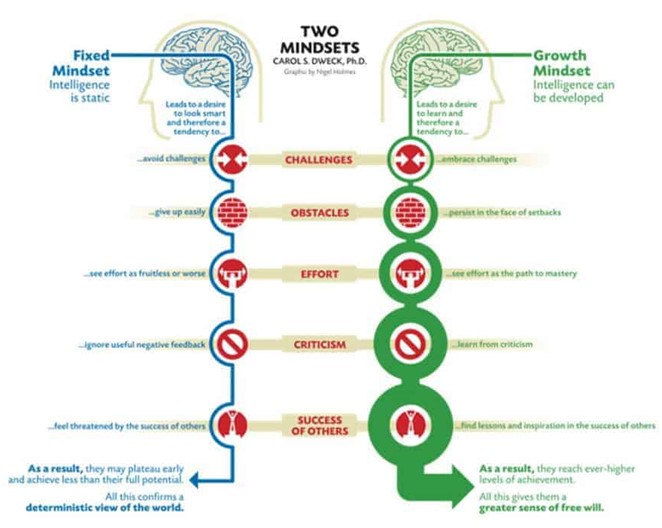
As we talked about earlier, a growth mindset is necessary for new managers because there’s a lot you need to learn. It’s also this growth mindset which is a key factor that great leaders know to look for in potential managers; they know that the only way a new manager succeeds is if they’re ready, willing, and able to rapidly learn and build new skills.
With this in mind, if you display this mindset through a willingness to learn and grow, you’ll help yourself get noticed while improving at the same time.

Study those you admire
The best examples to learn from are those managers you already know and admire. If you had, or have, a manager you love then look to them.
What do they do that you really appreciate? Try to pinpoint what makes them different from a bad manager you might have had in the past. Both can teach you what to do (or not do).
Also, look to those founders, CEOs, and managers from other companies whom you follow and admire.
Start seeing their advice from the perspective of someone who leads people as a profession. Ask yourself how you can live out the values, concepts, and lessons they speak, write, or talk about. The more you act like a leader, the more you’ll be treated like one.
Look to books for the greatest management lessons.
If you want to learn how to become a manager, why not look to those who have come before you?
Books are a great place to learn about being a manager. Many of the greatest modern leaders have put out books with all their best lessons summarized in a few hundred pages.
Whether you’re an aspiring manager or you’re preparing for a new promotion into management, this is one of the best places to look if you want to learn how to become a better manager quickly.
Here are some books I recommend for all future, would-be, or current managers alike:

High Output Management by Andy Grove
Andy Grove’s High Output Management remains one of the most influential books on management still over 35 years after it was written. Leaders across many industries swear by it.
As a manager, you’ll be faced with many new challenges you’ve likely never faced before. You’ll have to work through issues with team members, attend countless meetings, and learn how to go from an individual contributor to a multiplier.
Grove’s classic will teach you how to deal with all of this and more. Best of all, unlike many “pop management” books that drag on for 300-400 pages, Grove was concise in his lessons, coming in at just 220 insight-packed pages.
Further reading material from Andy Grove:
- 10 Key Andy Grove Quotes on Leadership from High Output Management
- How to have great one on ones like Andy Grove in High Output Management
The Most Important Management Concept You’re Missing: Task Relevant Maturity

How to Win Friends and Influence People by Dale Carnegie
Written in 1937, How to Win Friends and Influence People remains one of the best books ever written on leadership.
The book will help you avoid rookie mistakes like assuming the worst and bossing your team around. Instead, Carnegie will show you how to understand and work with others better in countless ways.
If Grove’s book is the tactical manual to the processes of effective management, then Carnegie’s book is the companion for all the soft skills of being an effective leader.
If you want more lessons on soft skills, consider reading these posts on the Lighthouse blog:
- 82 Ways How to Build Rapport with Anyone You Work With
- How to Improve Your Emotional Intelligence to be a Better Leader
How Managers can be more Effective Listeners

Creativity, Inc. by Ed Catmull
Ed Catmull is one of the cofounders of a little animation studio called Pixar. He helped guide the studio to incredible success, which led to Disney buying Pixar for $7.4 billion, and a stunning run of dozens of hit movies you’ve likely seen and love.
Catmull’s Creativity, Inc. is part-autobiography, as it takes you through the story of a dream two decades in the making.
However, it’s also one of the best books on leadership and management in the past decade, especially for managers of teams doing creative work. It helps you straddle the line between being pro-active and re-active, as well as building a culture of candor and accountability.
As you might imagine, it takes a lot of iteration and candid conversation to make a great movie, and really nail the story and characters. Fortunately, Catmull shares how they were able to do that with their “Brain Trust” system, and other approaches.
Further reading from the blog on Ed Catmull:
- 10 Key Ed Catmull Quotes on Leadership from Creativity, Inc
- The One Key to Building and Keeping a Great Company Culture
Embracing a mindset of ongoing growth and learning is a great way to ensure you’re on a path to success in your career. In doing so, you’ll likely find it’s a lot of fun learning the inside story on how others have succeeded.
If you’re looking for more books from great leaders to read, you may like some of the other books and authors we’ve profiled on the Lighthouse blog including:
- Hall of Fame NFL coach Bill Walsh with The Score Takes Care of Itself (our recap here)
- 12 time NCAA Champion John Wooden with his Life Lessons On and Off the Court (our recap here)
- Current day CTO Camille Fournier with The Manager’s Path (our recap here)
And for great audio content designed to help you become a better manager, listen to Lighthouse’s Create High Performing Teams Podcast episode, The Most Important Skills for Managers to Master
Some success tips for first-time managers
If you’re now a new manager, you’ve got a lot to look forward to. With that said, you might be a bit overwhelmed with everything and not sure how to get started on the right foot.
As we said earlier (and it begs repeating, especially now), becoming a manager is a career change.
Now that you are one, begin to see your journey as a leader and manager as a lifelong learning process. Chances are, you’ve got a lot to learn. That’s part of the fun of it, though. Like a puzzle you put together over time, each skill you pick up and lesson you learn will help you build yourself into a great leader.
Remember: You’re in the multiplication game now. Everything you learn can have a compound effect, because you’ll be helping each of your team members perform better as opposed to just you as an IC. To help you start off on the right foot, here are some essential tips for starting off as a new manager.

Build rapport with everyone (not just your team)
Good rapport is the key to maintaining good relationships with everyone you work with, from your team to your boss to peers.
As a manager, you want to quickly build rapport with each of your team members to start building a good relationship, which will promote healthy communication and help you better understand your team members as individuals.
That’s vital, but so is developing a relationship with everyone else you work with.
Building rapport with your bosses and peers helps you stay better connected to what’s going on in the company at large, and helps you navigate struggles and issues.
Think about it: if a stranger bumps into you, will you give them the benefit of the doubt? Maybe not. Meanwhile, if a friend or colleague you know did, you probably would assume they didn’t mean to. That’s just one kind of trust that comes from having rapport with others.
With all the new things you’ll be learning about, potential for mistakes, and inherent challenges that come working cross functionally, it’s incredibly valuable to have rapport with those you work with.

Start one on ones with your team
As a manager, one on one meetings are your secret weapon.
They allow you to effectively build rapport (making them great for facilitating #1 above), create a consistent feedback loop, and dig up issues affecting your team, among other things.
The only problem is it can take time to develop a strong foundation of regular one on ones with your team. That’s all the more reason to make sure you get started right away.
The sooner you start having regular one on ones with your team, the sooner they’ll see the value and want to keep coming back. Good one on ones are like a flywheel that keeps building momentum as you dig into topics important to your team, and over time help them fix and otherwise make progress on them.

Look for quick wins (Generate momentum)
Remember when we talked earlier about creative ways to make your team better and get noticed?
For example, if you notice something bothering a team member, or a task that’s unsexy but holding everyone back, taking care of either of those can send a powerful message to your team.
It’s important to grab some quick wins in your first few days or weeks as a manager as it creates a sense of momentum.
Why is momentum so important? Not only does it create a feeling of progress, which makes your employees happier, but it prevents burnout as it keeps them engaged and excited about the work they’re doing.
Even big projects like a long-term promotion, or a major initiative can have mini milestones along the way. Find them and look to celebrate them and you’ll keep your team focused and engaged for the long haul.
Great managers want to know your goals and help you achieve them. They’re also always thinking about how they can help their team, whether that means removing blockers, improving a process, or helping overcome conflict.
You can learn to do many of these things even without the title.
Be mindful of what is outside of your scope of responsibility, and don’t step on any toes. However, if you come from a mindset of caring about others and wanting to make things better, you’ll find most people are happy to have you make things better.
If you start working on some of the areas we’ve covered today, you’ll be far more likely to get noticed as someone with leadership potential and a future manager when the opportunity presents itself. You can do that by:
- Having an interest in being a manager for the right reasons
- Showing that you have the ability to teach others
- Making those around you better
- Learning from the best managers, and living their lessons
- Investing your time in a company that’s growing and is intentional about promoting from within.
Being a manager is as challenging as it is rewarding. By following these tips, you’ll be more likely to get noticed and be well-prepared for the role when you do get to become a manage
Be prepared
- Set personal goals. What do you want out of this new? What do you hope to achieve? What do you hope your team will achieve? Define what goals you want to accomplish.
- Educate yourself. Learn more about the different departments that you’ll be managing. Get to know the employees you’ll be managing.
- Clarify expectations. Discuss with your boss what they are expecting to see from you. Be sure that you understand. Compare that with your goals. Are you on the same page?
- Be professional. Develop a professional persona both in your behavior, language, and dress.
The 7 skills you need to be successful as a manager.
Some of what you need as a manager will be innate. There’s likely a reason you were chosen to be a manager.
There are other skills, however, you will need to learn and build. Even your natural gifts must be strengthened.
1. You must know how to get people to respect you.
This heading could have been phrased differently. It could have said that you must get people to like you. But being respected is more important than being liked. Some employees like ineffectual managers for all the wrong reasons.
The steps to gaining respect are simple:
- Respect yourself. Your own mental health and self-control are the foundation of others respecting you. If people see you don’t respect yourself in your behavior or how you talk about yourself, they will not respect you, either.
- It’s not about being nice. Feeling obligated to be nice leaves you feeling guilty. Nice people aren’t always respected. Instead of shallow niceness, be respectful of all people even in difficult situations.
- Don’t try to please everyone. You can’t please everyone, and you can’t please anyone all of the time. Your goal as a manager isn’t to please people, but to lead them so that their benefit is your concern and not whether they’re pleased about difficult decisions in the moment.
- Learn to say no. You can NOT say yes all of the time. Say no. Say it firmly, sincerely, kindly, but say it. Let those you manage learn to do the task or live with the outcome of decisions they’ve made.
- Their feelings aren’t your fault. Understand that each person you manage is responsible for their feelings. The decisions you make should be made for good managerial reasons, not to deflect or create certain types of feelings in people.
2. You must be organized.
Your ability to be organized is crucial. Disorganization leads to wasted time, lost productivity, and frustration in your team. Your bottom line will also take a hit.
- Make a habit of writing things down. Writing helps you retain information. It also means you’re thinking purposefully about what needs to be done.
- Be goal oriented. Goals have a way of lining up action and helping you shed what isn’t important to the goal. With goals, peripheral distractions fall away.
- Practice optimism. A can-do attitude makes being organized valuable. A negative attitude thrives in “why bother” disorganization.
- Give detail its rightful place. Pay attention to detail…but forget about being perfect. You can avoid sloppiness without being imprisoned by a fear of making mistakes.
- Use lists wisely. Make to-do lists but have a system to purge them. If a to-do item never gets done and you move it from list to list, did it ever really need to be done?
- Avoid procrastination. Do the hard things right away. The more difficult a task is, the more it should be done when you know you have the most energy.
3. You must understand the value of collaboration.
Your team needs to be able to work together as a team. If they remain autonomous units who refuse to work together, you will be trying to herd cats to get anything done.
To encourage collaboration among your team:
- Clarify the goal. Know what you want accomplished and communicate that to your team.
- Help them stay on task. Don’t micromanage but provide boundaries so your team can be creative within the boundaries without veering off course. These might be time constraints, tools or equipment limitations, periodic status updates, and so on.
- Make communication safe. For a team to collaborate well, everyone needs to feel they are free to share opinions without censure or ridicule.
4. You must be able to motivate people.
Motivating people is the difference between dragging a horse behind a cart, and a horse pulling the cart.
When your team is motivated, all energy is focused on problem solving, collaboration, and forward motion. No energy is wasted on begging, pleading, and cajoling people just to get the bare minimum productivity out of them.
To motivate people:
- Stop bribing people. Rewards work, but mostly they make people work for…more rewards. The rewards stop, so do the people.
- Make them care. People are motivated when they feel passionate or care about the work. Show them why their work matters. Show them how they are making a difference.
- Make note of progress. Be able to spot progress your team is making, and make sure they know.
5. You must have critical thinking skills as well as emotional intelligence.
Emotional intelligence is the “ability to identify and manage your own emotions and the emotions of others.”
Emotional intelligence includes:
- Being aware of your own, and other’s, emotions.
- Controlling and harnessing those emotions in a productive, problem-solving direction.
- Regulating those emotions to keep them from destructive excess in either direction.
Without emotional intelligence, much of what is driving or influencing the relationships and lives of your team will be a mystery to you. The workplace isn’t void of emotion. Remember, emotion is part of what you use to motivate people.
However, you can’t reside only on emotion.
Emotional intelligence is important because you’re leading people, but critical thinking skills are needed for identifying and solving problems.
Can you control emotion and make decisions to solve difficult problems that might create negative emotions in those you manage? Critical thinking include:
- The ability to identify and analyze an existing problem.
- The ability to gather and interpret data relating to the problem.
- Determining a cause of action that solves the problem with the best result for your business.
- Communicating to your team that plan of action and why it’s the right one.
6. You must have communication skills.
Endless books have been written about how to be a better communicator. As a manager, you’ll never stop working at improving your communication. Absolutely everything you do has a communication component.
There are five skills you must master:
- Clarify the context. Every person on your team comes to work with their own context from their upbringing, current situation, family life, and experiences. When everyone is listening through their own context, they are all hearing something different when you communicate. As a manager, you have to work on creating a shared vision, a big picture. You might have to explain or describe it from several different angles to cut through all the contexts in the room.
- Communicate to the individual. Even when you’re talking to the team, be sure everyone understands what’s in it for them, and why they should care.
- Repeat, and often. It’s easy, particularly when you’re busy, to have a checklist mentality. You communicated something important once, it’s checked off, and now you move on, right? Nope. You must communicate the same thing multiple times in multiple ways. If you sent an email, bring it up again in a meeting.
- Listen. When you put information out to your team, you need to listen back. You need to check to make sure your team understands what you were communicating. Find ways to ask questions that get past team members who say they understand when they don’t but are unwilling to admit it, such as having them repeat to you that you have said in their own words.
- Provide action. Communication without a call to action is monotonous. Not all that you have to say to your team will have a call to action but try to find something. Put into action what we hear helps cement it in our mind.
7. You must know your industry.
Every industry requires different management skills.
This means you’re driven to keep learning. It means you’re self-motivated to pay attention to industry trends through training, conferences, and publications. It means you take every opportunity to learn from those who have been in the industry longer than you, or from your own boss.
How to manage friends
Everyone needs friends at work. It’s a miserable place to be if you have none.
Unfortunately, the challenges of being a manager of a friend make it an easy way to lose your friend. 60% of first-time managers say that transitioning from being friends and co-workers to being the manager is the most challenging hurdle.
- Be fair to everyone. The first few times will be the most difficult, depending on whether or not your friend understands the work relationship has changed, but you must be fair in dealing with everyone on the team and not show favouritism towards your friend. This is tricky; sometimes it’s just as easy to be harder on your friends to prove you aren’t showing favour to them.
- Use documentation. It’s always a good idea to document the good and the bad, but it’s especially so when you have friends on your team. Should anyone say you are showing favouritism, you will want the documentation to show that you are following policies fairly.
- Lose old grudges. Get rid of the tendency to use office cliques, gossip, and grudges that you might have been exposed to or participated in as an employee against any team member you are now managing. As a manager, you need to start fresh with everyone. Avoid asking your friends for inside information on other team members.
- Wear the uniform. While you may not have an actual uniform, remember that when you are on the job, you are wearing the manager “uniform” and not the “friend” uniform.
- Compartmentalize. Even when you’re “off the job” you must be careful to not talk about work or team members if you are hanging around with your office friends on your personal time. Work gossip and complaints are inappropriate conversations with your friend as long as you are the manager.
- Accept change. In most cases, your friendships will change. Some will cool off, some will end. Your previous friendship has most likely ended as you know it and you must accept that as the manager. Don’t expect people to treat you the same in the break room or the hallway. You’re the boss, not the buddy.
- Be friendly. You can still be friendly. You don’t have to close off from everyone. Just be aware of your position and consider having a meeting right away to address concerns that your friends might have and reassure everyone that your door is open.
- Get a mentor. If possible, find a manager or other leader who can help you as you navigate what will be a tricky time of learning and transition. You can’t go to your friends for advice or help; you need to look up the chain now.
How to deal with disciplinary situations
Taking disciplinary action against an employee is no small thing. The absolute first thing you must do is understand what the situation actually is.
Problems are going to come to you in different ways. Other employees will come and tell you about something. You’ll notice negative changes in productivity or sales. Customer complaints pop up. You see something happen first hand.
Know what the problem truly is first, so you know what disciplinary action is called for according to the employee handbook or company rules. Then, determine what approach you are to take based on those rules.
Let’s look at a few unpleasant aspects of employee discipline.
Identify Problem Employees
Problem employees can be divided into six different types:
- The Victim. They have no accountability for their actions. They view everything as happening to them, and that they have no control over their life or actions. You must clarify their accountability, that they are responsible for their actions no matter what situation they are in.
- The Hisser. Like a snake, this person seems to lie in wait and then lash out. They tend to rant and are provoked without warning. Unless this person cares about how their behavior is affecting others and agrees to make changes, they will have to move on.
- The Negative. For this person, everything is negative. Any changes, any ideas, any new policies, or possibilities are quickly made into a negative. They can bring everyone down. As a manager, this person can be valuable in terms of being a devil’s advocate (great in collaboration!). You must work with them on how they view and accept change, and you should avoid putting them in any leadership role unless they are able to control their negativity reliably.
- The Ghost. This person is constantly absent. They always have a reason for not being present at work or being willing to participate in projects. When there’s work to do, the ghost is gone. As a manager, you need to be direct. Speak frankly; perhaps this isn’t the job for them. If they don’t change their behavior, they need to find a job that’s a better fit.
- The Narcissist. This person is never part of a team. They care only about themselves in all situations. Change is difficult for a narcissist, but if they are extremely talented, you may want to find a way to turn that self-preservation and self-motivation into an asset for your business.
- The Einstein. This person is smart, knows it, and wants to make sure everyone else knows it. Their smarts are an asset, but the arrogance that goes with it, is not. You’ll need to talk to this person, and try to guide them to use their intelligence to build and encourage others instead of making them feel like less.
It’s valuable to identify which type of problem employee you’re dealing with. Most employees aren’t problem employees, but if they are, you need to deal with them in the right way for the-the issue they exhibit and be aware that you can’t let the behavior drag on. For problem employees, there must be a resolution or the whole team suffers.
Disciplinary Actions
The company’s employee handbook will outline what kind of disciplinary action to take in different situations, but there are a few methods that you’ll likely deal with.
Writing people up.
Documentation is crucial as a manager, both for good behavior as well as bad. Legal considerations require that you document employee interactions before you take further steps that may lead to firing.
- Repeated or excessive tardiness or absence.
- Poor job performance or outright incompetence.
- Failure or refusal to comply with company policy.
- Violence or threats of violence.
- Sexual harassment complaints.
- Discrimination.
- Inappropriate behaviour
- SOP, policies, and procedures
Don’t forget to document when an employee, even (or especially) a problem employee, does something good. If you don’t, it may seem as if you only document the bad and it might seem like you are picking on or discriminating against an employee.
When writing an employee up:
- Be consistent. Follow your policies equally for everyone. If you write up one employee for being tardy, you must do it for all employees.
- Be specific. State what happened specifically. Don’t simply write “employee was late”; note how late and on what date. Note the reason or communication you had with the employee to show that the employee knew you had a problem with what happened.
- Be factual. Avoid inserting your own emotional feelings or conjecture about what happened. State the proven facts clearly. Note what policies were violated. Note the date and time it happened and any other information of that nature.
- Note consequences. Write down what will happen to the employee if the behavior continues, according to your policies. Note that you’ve informed the employee of these consequences according to what your policies dictate.
- Have the employee sign and date the write-up. The document is going in his or her personnel file. If the employee will not sign it, write that up, too.
- Allow for response. Let the employee respond in writing for their own file.
How to deal with managerial stress
The workplace is full of stress. A study found that 80% of workers feel stress on the job, and half admit they need help managing that stress. Some of that stress leads to actual physical pain, with 62% feeling neck pain.
Your employees will feel stress, and you will have your own workplace stress in addition to that which you pick up managing those employees. You must find methods to manage it or you’ll start dragging the effects of that stress into your personal life.
There are a few key methods that work:
- Reassess your perspective. Some of what you feel stressed about isn’t the reality of the situation. You might be reading into what’s happening or assigning emotions to it that aren’t necessary. Not everything is a crisis, even if it feels that way. Learn to step back, control how you feel, and logically look at whatever situation is overwhelming you. Is it as bad or impossible as you feel?
- Block and control your time. If you let continual crises or employees drag you around, your time is never your own. You are always on a wheel, never catching up. Set aside a regular period during the day or week in which you do not schedule meetings, calls, or any other interruptions. Too often you feel stressed because you’re not getting things done and they hang over your head. Use this time to catch up. You’ll feel better.
- Exercise, and pay attention to the physical. Staying healthy with exercise, diet, and drinking water is not just a trite admonition. Your physical health has a direct impact on how you react and manage stressful situations.
- Find a support network. As a new manager, your work friends (your old support network) aren’t people you can turn to with your management struggles. Find other managers, mentors, or people outside of work, that can listen and offer meaningful support and advice. You need someone to talk to. As a manager, you will be hearing about employee problems regularly. You need the same ability to turn to someone to talk to.
Building a strong team
Your job as a manager will be much easier if you build a great team. That seems obvious, but it’s easy to fall into the habit of managing the status quo instead of building greatness. To build a strong team:
- Hire the right person. If you have any say or involvement in the hiring process, take it seriously. 75% of employers hire the wrong person, and that ends up being costly both financially and in human resources. Don’t hire in desperation. Run background checks. Talk to their references. Find out what you can and decide if that person is both right for the job and right for your team. Every team has its own personality. Hire wisely.
- Build on strengths. Take the time to discover the strengths of each team member. If an employee is lacking in an area, you aren’t likely to build that up. Give them work to do that fits their strengths.
- Be transparent. Secrecy and isolation make weak teams. Be transparent as much as possible about the big picture, the direction the business or project is headed, what you expect, problems, victories—don’t keep it hidden. Secrecy inspires gossip and division, not strength.
- Build trust and confidence. By being consistent and reliable in how you manage your team and relate to each person, you’ll help them trust you. You also make it easier for them to be confident in their work; they don’t have to wonder how you’ll respond since your consistency erases those kinds of doubts.
- Use mentorship. Good mentors are priceless. Set up a mentoring approach where more experienced team members can help those who are newer. Mentoring benefits both parties involved. They each learn from the experience.
- Skip gimmicks. There are a lot of methods some managers use to “trick” their team into being productive or work together. They might work for a while, but not over time. Focus on building a team that works great together no matter the situation, no matter if there’s a reward.
A strong team is one that works together and isn’t isolated from each other. Create an open team through meetings, communication, office layout, and whatever else it takes to build cohesiveness.
Driving your team to success
Getting your team to move towards success is not like driving a team of horses. There’s no whips and yelling. You can’t force people to do what you want them to do, but by rethinking how you “drive” your team, you can help them to succeed.
- Their success is your success. Some leaders don’t want their followers to exceed them, which, frankly, makes them bad leaders. If your team members can outshine you, can exceed what you can do—all the better for the team. Don’t be afraid of that. Don’t try to put a stop to it. Give your team every chance to achieve more than you.
- Build leaders within. One reason for item #1 is this: you are always looking for leaders within the team. Give them a chance to lead smaller teams or projects. Find out who tomorrow’s leaders are.
- Take retention seriously. When people quit, it costs you. Stay on top of dissatisfied or unhappy employees, and fight hard to make the work environment one they want to stay a part of. There are more costs than just financial, of course. When employees leave, they take their skills, knowledge, personality, and creativity with them.
- Be a motivator. Encourage them. Open every door possible to make their work more successful. Reward true achievement, particularly when the work is challenging.
- Use rewards, but cautiously. It is good to reward your team but remember that rewards are not a substitution for real motivation. If the only thing keeping your team moving forward are rewards, the moment you take the rewards away your team stops. Reward them for great work, hard work, team accomplishments, and meeting goals. Don’t use rewards as a carrot on a stick just to get them to show up to work each day.
- Be goal focused. You’ll be creating sales and productivity goals, and you’ll be leading your team to meet them. Break down those big-picture goals for individuals or groups on your team. Provide training to help them make their own goals that will help them meet those bigger goals you expect of them.
- Make it safe to be creative. Innovation doesn’t happen by fiat. It happens when people feel free to be creative and come up with solutions that might not seem “safe”. Create an environment where brainstorming, unusual problem solving, and out-of-the-box thinking isn’t mocked or pushed down. It’s easier to manage according to strict systems and structures, but innovation doesn’t flourish in that environment. Being free to innovate is highly motivating for your best employees.
Create KPIS. You need to know what success looks like for the department and the only way to establish it, is to measure it. Identify how you are going to measure the success of the department and communicate it to them as such. Clearly stipulate and communicate the goals and objectives to ensure all is working towards the same end goal.